
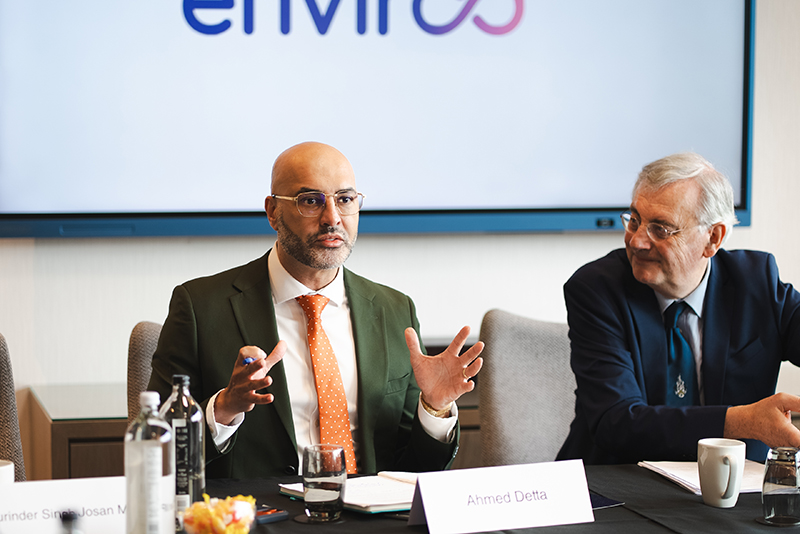
DEPOSIT return scheme infrastructure partner Enviroo hosted a panel discussion at the Labour Party Conference last week, examining how PET collected through the UK’s DRS can be kept in the UK, and redistributed fairly and equitably.
Presided over by Jim Armstrong, chairman of RECOUP, the session brought together MPs, drinks producers and their trade body, buyers of recycled PET, reprocessors, and waste managers. The event explored what happens once a bottle has been collected, who does the material belong to, how can it be kept within the UK, and how is its redistribution made fair.
Dr Margaret Bates, an independent circular economy and resource management consultant, stated the importance of producers having access to affordable, recyclable PET.
The panel discussed how producers hold a right of first refusal for the purchase of DRS-collected material, and stressed that this must work for businesses of all sizes, to keep collected bottles as food-grade materials, and avoid loss to lower grade uses.
Andy Bagnall, director general of the British Soft Drinks Association (BSDA), discussed the differing needs of member organisations. He stated that whilst larger producers may have the capacity to undertake their own PET reprocessing, smaller members are likely to request flake, or even pellet. He drew attention to a gap in the DRS legislation, stating that, ‘Some of our members, third-party manufacturers, contract manufacturers, and co-packers, who make the drink for other brands and retailers, don’t have a right of first refusal under the regulations. It’s quite important that we get the details of the plans that address that issue. We need to have some kind of mechanism where the brand owner, who owns the rights of the material, can transfer it to the actual manufacturer of the brand.”
Josh Newbury MP, a member of the environment, food and rural affairs committee, noted that DRS is one of the few policies to have progressed under both the previous and current governments, and said gaps in the regulations need urgent attention before the scheme starts.
It was the unanimous view of the speakers that PET collected through the DRS should be reprocessed in the UK. Ahmed Detta, CEO of Enviroo, stated that 15 new recycling facilities are needed to support onshore recycling of all PET that will be collected via the DRS.
When asked how Enviroo was supporting the DRS, he said, “We’ve not waited for legislation. We’ve gone ahead and started to build”, in reference to how Enviroo was addressing the current capacity gap by building infrastructure that enables interoperability to achieve true circular economy.
Gurinder Singh Josan MP linked the potential future growth in domestic reprocessing capacity to the government’s re-industrialisation agenda and the creation of new jobs in the UK.
Andy Bagnall said producer demand for bales, flake, or pellet would create the opportunity for long-term off-take or tolling agreements that could underpin investment into new UK recycling facilities. He also drew attention the treasury’s intention to charge VAT on unredeemed deposits, stating that it this could extract around £600 million over three years – money that could otherwise help fund recycling infrastructure. Indicating a desire for this this charge to be reconsidered, he said, “It would cost the treasury very little, but could have a very positive impact on the scheme.”