
FUTAMURA UK has announced ‘significant’ progress in reducing the carbon footprint of its cellulose films.
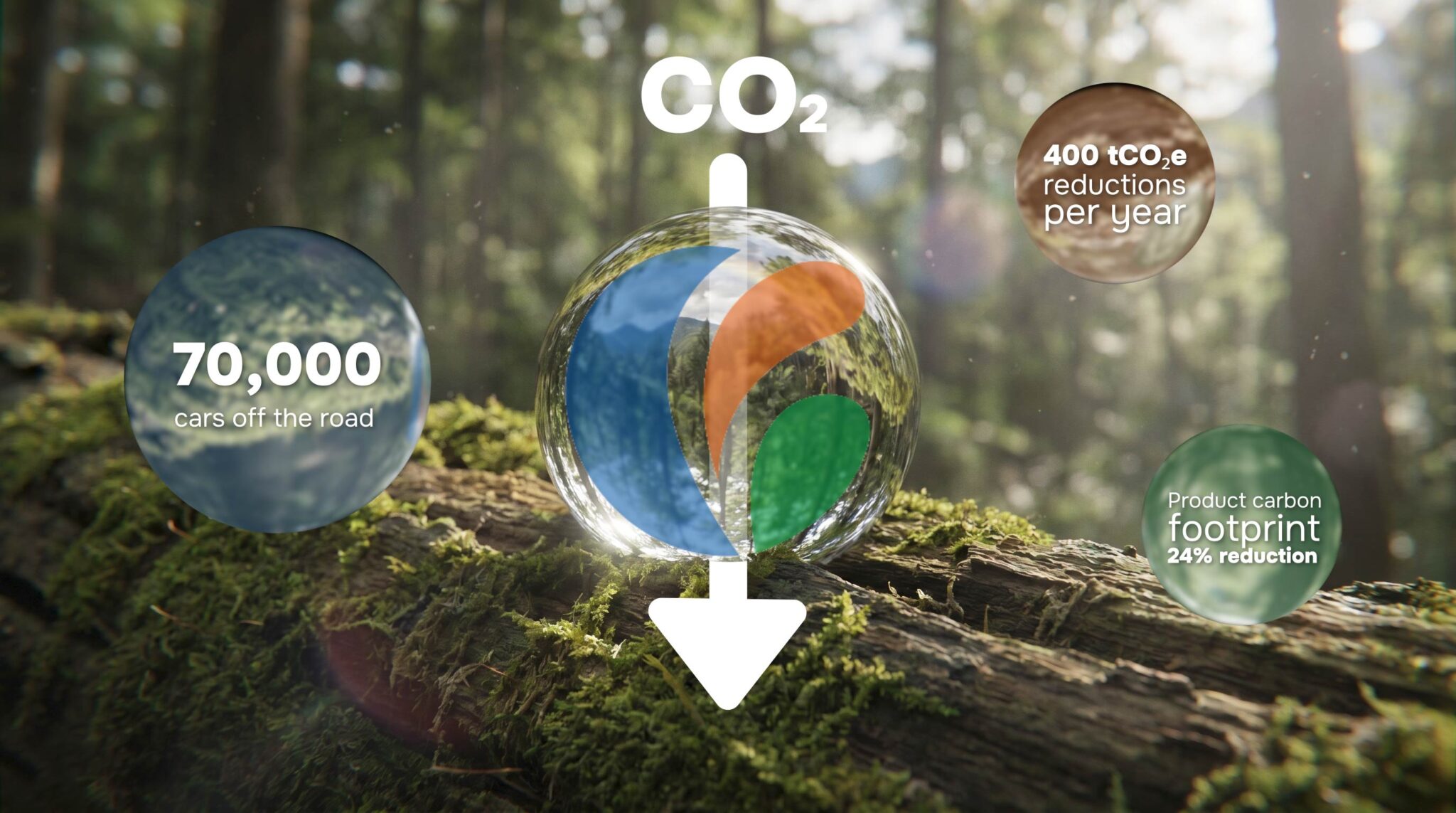
Since 2019, the business revealed it has delivered a cumulative carbon saving equivalent to removing ~70,000 cars from UK roads for an entire year. This figure represents avoided CO₂e emissions associated with lacquered and plain film production, calculated using IPCC AR6 GWP100 values from an independent third-party life cycle assessment from ERM. This is said to have resulted in an average reduction of 24% of the carbon footprint of the company’s NatureFlex films.
Building on this, additional investments are now underway and scheduled for implementation by 2027/28. One example is the recently announced Wet Sulphuric Acid (WSA) project. The installation will divert waste gases from the production process to generate a valuable raw material via an oxidation process. Heat generated as a byproduct of the chemical reaction will then be used to generate steam, the main form of energy utilised in the production process. Once operational, this asset is tipped to generate 15% of the total energy requirement of the Futamura site.
Futamura added that a key contributor to recent carbon reductions has been the investment in a new, high-performance compressed air system.
The firm has also implemented a range of targeted energy efficiency initiatives across its site. In 2022, air conditioning units in the administration block were reprogrammed to operate only when needed and within controlled temperature limits, while ongoing lighting upgrades have replaced fluorescent systems with modern LED technology.
Lucy Cowton, Futamura’s sustainability manager, said, “The reductions in our operational and product carbon footprints reflect the dedication of our workforce and their commitment to continuous improvement. We see this as just the beginning, with future investments, such as the WSA plant, expected to reduce our operational emissions even further. We are incredibly proud of the progress we are making.”