
PACKAGING manufacturers are being urged to invest in scaling innovative materials to cut the costs of sustainable packaging, after a survey found that almost half of UK consumers would be unwilling to pay extra for more eco-friendly solutions.
Joe Sizeland, MD of food packaging supplier iKrafts, told Packaging Scotland that the business commissioned the survey into what consumers really think about sustainable packaging in a bid to determine how much it influences purchasing decisions.
766 UK adults participated in the research, which found that 47.5% are unwilling to pay anything more for sustainable packaging and over 80% won’t pay more than 5% extra. Only 6% of respondents said they would pay more than 10% extra.
Just 8.5% of respondents ranked packaging sustainability as their top priority when buying food. This places it behind food quality, price/value, dietary requirements/ingredients, and portion size in terms of importance.
Joe said, “We wanted to identify the real factors behind consumer behaviour, from values and price sensitivity to loyalty and trust. More consumers are valuing sustainability than ever before, yet the results of our survey show that the majority of these consumers are not willing to pay extra for sustainable packaging, and consider taste and quality more of a priority.”
Joe believes the packaging industry must try to close the ‘green premium gap’ by investing in scaling materials such as bagasse to reduce the costs of sustainable packaging. If sustainable packs sit at the same price point as conventional ones, consumers will no longer face a trade-off.
“Packaging should be designed to preserve the shelf-life and freshness of food, through temperature regulation, structural integrity and durability,” Joe added. “Regardless of whether packaging is biodegradable, if it doesn’t protect the food inside it can hardly be classed as a sustainable solution.”
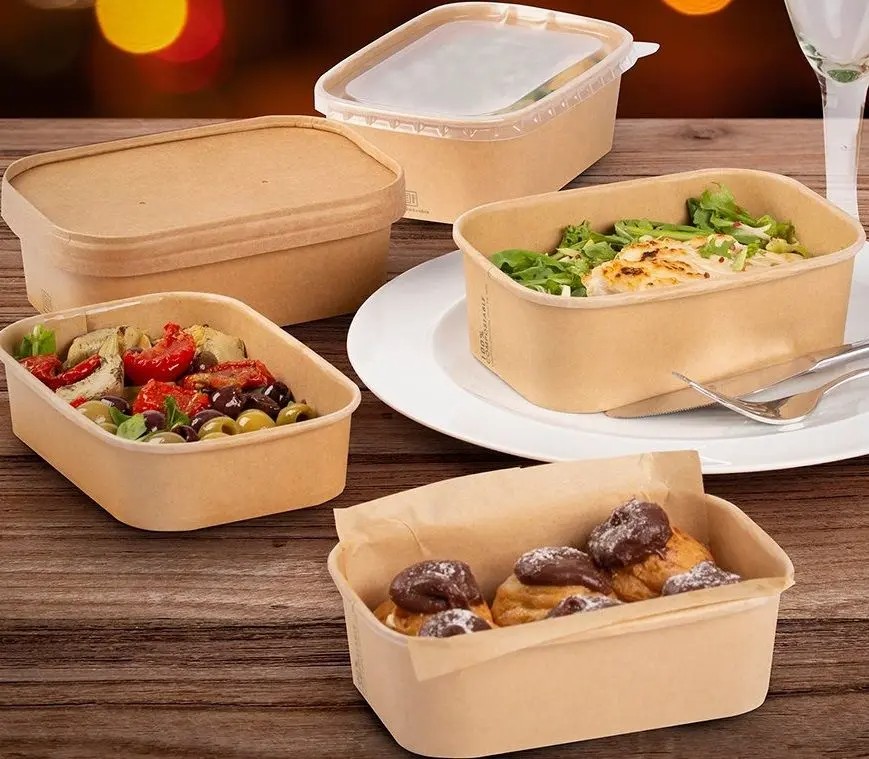
In recent years, iKrafts has focused on expanding its range of biodegradable packaging products, including chip trays, cutlery, plates, bowls and takeaway containers. This has involved the increased use of compostable materials, such as bagasse, which is a by-product of sugarcane pulp, as an alternative to traditional plastic and polystyrene packaging.
“We have also introduced and promoted the use of plant-based packaging materials including Polylactic Acid (PLA) that is derived from renewable plant sources,” Joe continued. “This can be used for sandwich packs, cold cups and lids. These sustainable alternatives provide hope for reducing dependence on fossil-fuel based plastics, while helping businesses meet their growing environmental expectations.”
Given current financial pressures on businesses, Joe agrees it’s unrealistic to argue that companies can burden the total cost of sustainable packaging. However, with consumers unwilling to pay extra for sustainable solutions, the costs must be absorbed elsewhere in the supply chain.
“Instead of businesses carrying the full cost of sustainable packaging, it should instead be spread across suppliers, manufacturers and retailers too,” Joe concluded.