

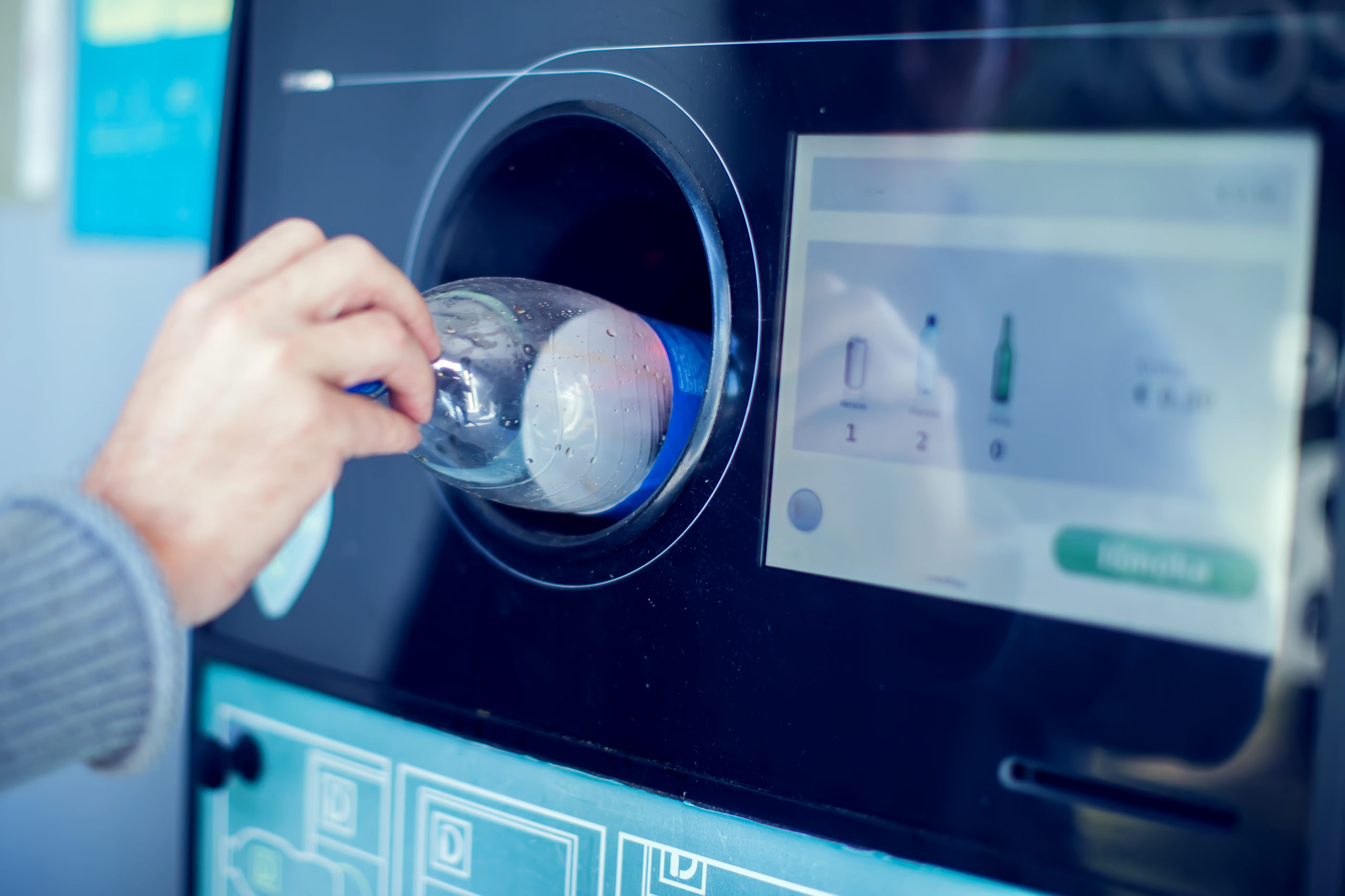
EXCHANGE for Change, the organisation delivering the deposit return scheme (DRS) across Scotland, England, and Northern Ireland, has confirmed the initiative’s return handling fee (RHF).
The RHF is a payment made to retailers operating a return point for customers, with it covering the costs involved in purchasing equipment for collection and storage of beverage containers.
Set to operate on a tiered basis across manual and automatic return points, the UK’s RHF will provide for small to large volumes of returned containers.
As a result of extensive industry consultation, engagement and research, Exchange For Change has set the RHF at 3p per container at manual return points, and at automatic return points, tier 1 – 5p per container, up to 225,000 in-scope items returned annually; and tier 2 – 1.3p per container, for annual in-scope returns in excess of 225,000.
Russell Davies, Exchange For Change CEO, said, “We have taken onboard a wide range of feedback provided by retailers, producers and trade bodies, and established a return handling fee that reflects the complexities of the UK retail landscape and ensures the scheme remains in balance.
“The UK’s retail landscape is unique in the world, spanning large supermarket chains, medium-sized franchises and a very high ratio of small and independent convenience stores comparative to other nations.
“This means the network of return points across the UK will be extensive, and the nature of collections will range from small convenience stores manually collecting and returning a small amount of containers, through to large multinational supermarket chains operating multiple reverse vending machines that collect several thousand containers each week at every store.
“The RHF reflects this diversity in our retail sector, and delivers a fair scheme for all.”
The RHF will be reviewed early next year prior to the scheme going live, and it will continue to be reviewed annually to take account of new data available from producers and retailers, as well as to consider other relevant factors.