
JAMES Cropper is backing an initiative involving Little Coffee Cup and Carlisle United Football Club that demonstrates how used coffee cups can be collected, recycled, and reintroduced into the paper supply chain.
The project builds on the launch of Little Coffee Cup’s Big Surprise, a children’s book produced using paper made from recycled coffee cups via James Cropper’s CupCycling process. The scheme now incorporates live cup collection and recycling activity at Carlisle United’s Brunton Park stadium, creating a link between storytelling, consumer engagement, and circular infrastructure.
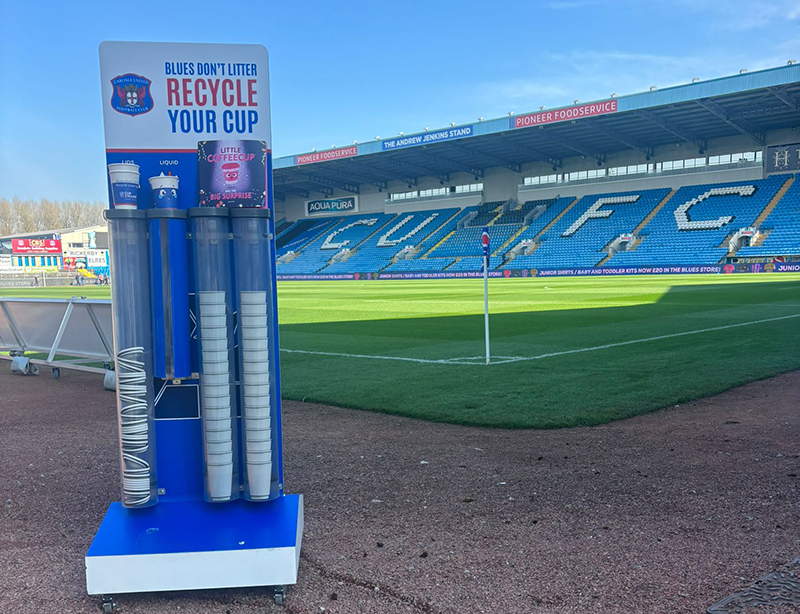
Over the next four Carlisle United home games, cup collection and storage activity will take place within the stadium environment, supported by North West Recycling (NWR) working alongside Hayley Slack.
The wider initiative brings together a network of partners working to enable closed-loop outcomes. co-cr8 is supplying branded collection bins to support in-stadium engagement, while CupPrint has produced a partnership edition of the PE-lined paper cups used at matches, supplied and served within the stadium by John Watt and Son as Carlisle United’s catering and beverage partner. NW Recycling is responsible for collecting and baling used cups and monitoring returned volumes over the course of the season to better understand recovery rates and participation levels.
Following collection, co-cr8 will transport the recovered cups back into the recycling stream, where James Cropper will process the fibre using its proprietary CupCycling technology. The recovered material will be used to create paper for future Little Coffee Cup products.
CupCycling works by transforming PE-lined paper cups — traditionally considered difficult to recycle — into high-quality fibre for premium paper applications.
Stephanie Walker, head of technical at James Cropper, said, “The initiative highlights how regional partnerships can play a critical role in advancing circular economy principles. By combining local expertise, venue-based collection, and specialist recycling capability, the project provides a tangible example of how materials can be captured, processed, and reintroduced into manufacturing cycles within a defined geographic ecosystem.”