
PROMOTIONAL FEATURE
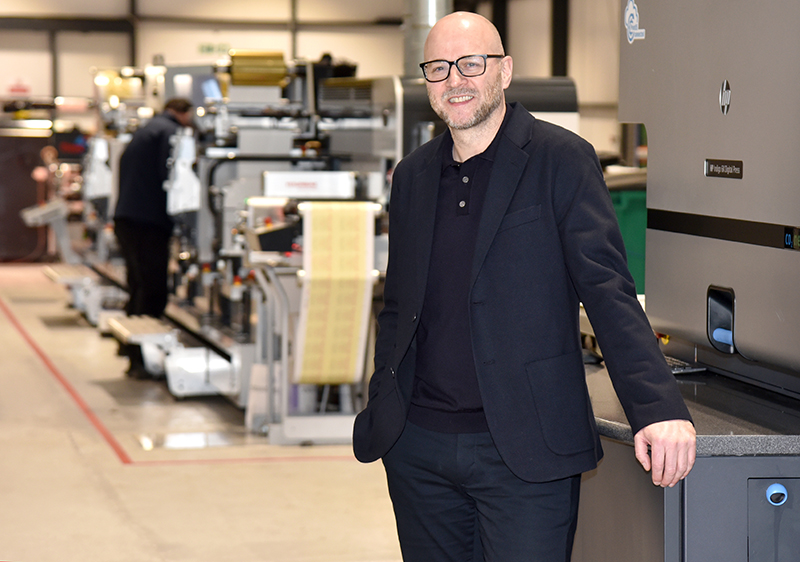
Packaging Scotland recently visited Renfrew-based Spirit Labels to ask MD Tom Lightbody about the firm’s impressive growth, ongoing investment strategy, and ambitious plans to become the premium digital label partner for the Scotch whisky industry
Q) What’s the history of Spirit Labels?
A) Spirit Labels was launched in 2024 to produce premium digital print for the Scotch whisky industry, combining the mentality of a major print plant with the customer relationships associated with a smaller company. Our leadership team all have direct experience of running multi-national print operations, so from the outset we built Spirit Labels with the structured workflow, capacity planning, data control, and quality systems usually found in much larger companies.
Over time we have expanded our technology, integrated advanced HP Indigo digital systems, and strengthened our finishing capability through ABG.
While we were set up to service the whisky industry, we have evolved into a business that can work across many sectors and is now geared for both short runs and cost-efficient longer runs. Digital print is more suited to larger scale work than you might think.
This year we have grown our workforce to 19 by expanding our marketing, CSR and customer service departments, and taken on a full-time scheduler and another finishing operator. We’ve also currently got two apprentices and two trainees in the reprographics department and print and finishing.
That’s something I’ve always promoted. It’s important to bring people in for their own benefit to learn a skill at a young age, but also the benefits to the business of having a constant stream of talent coming through are huge. One of our apprentices was named Overall Apprentice of the Year at the Scottish Print Apprentice of the Year Awards.
Q) What services do you offer and how do you stand out in a competitive marketplace?
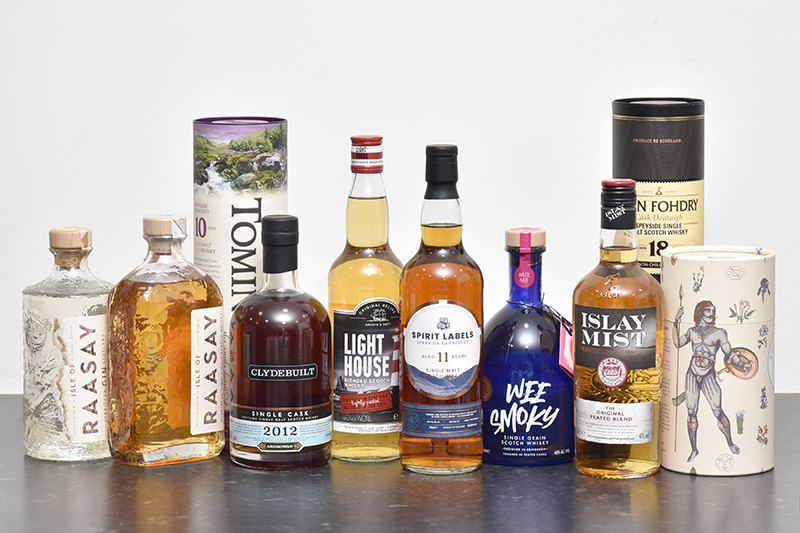
A) We produce premium labels and tube wraps for whisky, gin, rum and related spirits, although we are not limited to the spirits industry as our capabilities include digital printing, variable data, foiling, embossing, debossing, textured varnishes, and high-detailed substrates.
What differentiates us along with our quality and operational capacity, is our flexibility and close customer relationships. With the large multi-national printers, their scale often works against agility. Spirit Labels offers rapid turnaround and hands-on collaboration with the customer. We are constantly dealing with short turnaround jobs.
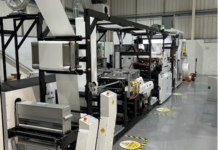
The blend of a high-end product and personal service is the competitive edge. Our advanced technologies with the HP Indigo, combined with ABG’s finishing lines, allow us to handle both short-run and long-run jobs with high efficiency, low waste, and consistent colour. We run a very lean, responsive, and controlled operation that can deliver high quality work at speed and scale.
Q) What are the benefits of digital print?
A) Apart from the speed, colour accuracy, and versatility, it enables fully variable artwork or data, eliminates the plate costs, and reduces waste. For larger brands, digital removes bottlenecks, supports just-in-time delivery, and provides the flexibility to release products without tying up cash in label inventory.
Colour accuracy is a big thing. Once it’s matched on the press, it remains consistent for the whole run. Digital print has long been known as the solution for limited editions and rapid reprints without compromising quality. However, what we are discovering is that, with our finishing technology, we can compete with the larger volume work as well.
Q) What trends are you currently seeing in the whisky and spirits sector?
A) Premiumisation continues, with brands always looking for different ways to utilise the screens, foiling, and embossing – anything to make the labels stand out. Variable data is something we do a lot of. And embellishment levels are rising with tactile finishes, heavy textures, and print on subtle foils. There’s a clear shift toward design that feels crafted rather than mass-produced.
There’s also a big push for sustainability and reduced waste, which suits our digital operation.
Q) Is it possible to combine sustainability and luxury?
A) Yes. Premium recycled or FSC materials have evolved and many now match the quality of traditional premium stocks. By pairing these substrates with our finishing techniques and low-waste varnish systems, you can definitely deliver a luxury feel with a lower environmental footprint.
The nature of digital production also lends itself to being more sustainable regardless of what materials you’re using.
Q) Do you collaborate with other Scottish businesses?
A) We do. Collaboration is central to how we operate. We work directly with distilleries, bottlers, design studios, creative agencies, and packaging companies across Scotland.
On-site press passing is a big thing for us. We like customers to come in to the factory as it gives us a chance to show what we can do. We’ll build relationships on the back of that. Being local allows faster proofing and face-to-face problem-solving.
This level of partnership is one that large global suppliers struggle to match. For larger customers, this local connection shortens timelines, reduces miscommunication, and keeps projects moving.
Q) What have been some of the most memorable projects you’ve been involved in?
A) Limited-edition labels with intricate foiling, heavily tactile labels for cask-strength releases, or concept-driven designs that require unconventional substrates are the first ones to spring to mind. We’ve produced artwork requiring multi-layered embellishment, high-precision registration, and bespoke finishes that push digital technology close to analogue craft territory. We’ve delivered projects involving dozens of label variants, complex finishing, and short lead times.
We completed a large project last year for Whyte & Mackay involving a Jura label, which was very collaborative. Every bottle label was unique. That went down really well and was nominated for an award. Another project was for Whyte & Mackay’s Fettercairn whisky, featuring a patina foil effect. Other standout projects include labels for the Raasay range of spirits and a number of wraps.
Q) What have been some of the most recent developments within the business?
A) We have expanded our quality systems, camera control, and invested heavily in the latest finishing equipment, while reworking our internal layout to streamline workflow.
Fly-eye camera technology for both rewinders has proven to be a great investment. The way the camera system works makes it very, very difficult for any poor quality to get out the door.
Our quality scores were never a problem but putting this in place has delivered a belt and braces approach.
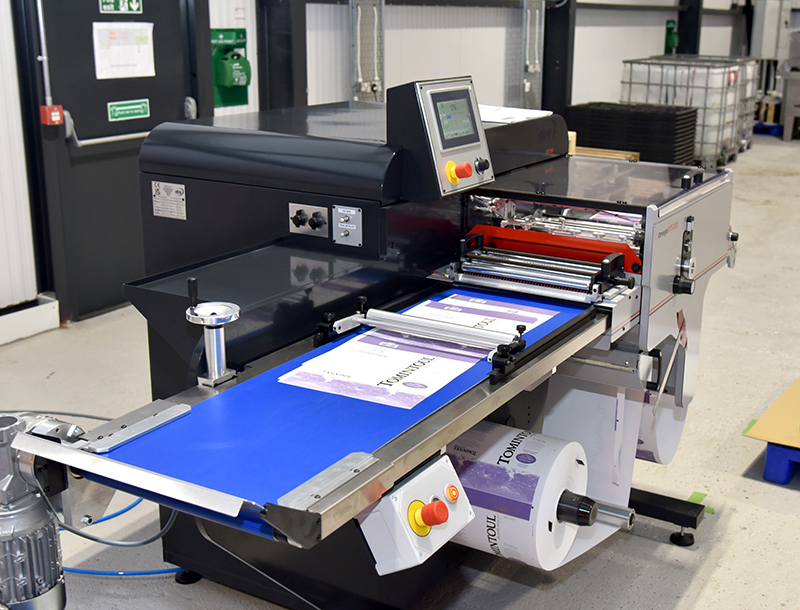
We’ve started using Digicons to produce tube wraps. We’ve now got our own sheeter so we can deliver the full production of tube wraps as well as labels.
A great thing about us being such a young company is that everything we’ve got is pretty much the latest version. We held a strategy day recently and one of the things we agreed on was that we need to make sure we’re always at the cutting edge. To support this, we’re setting up quarterly reviews with all the software suppliers, machinery manufacturers, and material suppliers. We’re keen to ensure that you could go anywhere in Scotland and not find more up-to-date technology than what we’re running.
Q) What can you tell us about your future plans?
A) Our priority is controlled growth across the whisky industry for labels and tube wraps, although we are looking at other sectors as well.
We’ve got plans to grow over the next five years. We’ve got room for a third line in the factory and further room for finishing equipment. This year, we gained another 80-90 brands. We’re optimistic about our growth but I don’t think it’s unrealistic because we can see what’s happening with the customers we are dealing with.
The goal is to scale without losing the customer-first culture that gives the business its identity. We know how large-scale print operations are run – and we also know where they can be rigid and inefficient.
Spirit Labels is built to deliver the same reliability with far greater agility and flexibility. We’re ready now to build for even larger demand.