
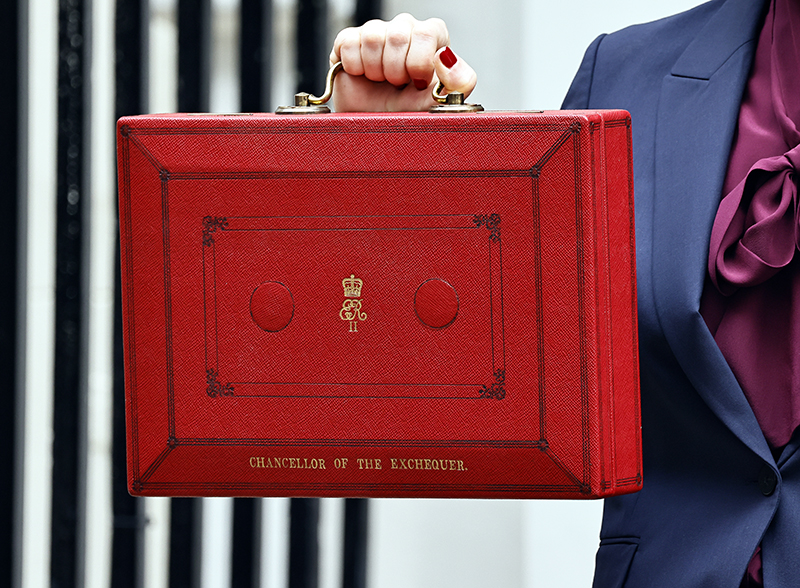
CHANCELLOR Rachel Reeves’ autumn budget contained a number of announcements of relevance to the packaging industry.
Of particular note was the increase to the Plastic Packaging Tax (PPT), which was confirmed to rise in line with inflation, a further rise to the national minimum wage, and the announcement of a £1.5 billion skills package aimed at tackling the UK’s labour and skills shortages. This will see apprenticeships, digital training, employer incentives, and AI-focused programmes brought together under a single framework.
Packaging Innovations & Empack 2026 invited key stakeholders from across the print, packaging, recycling, materials, and design sectors to share their reactions to the budget.
Thomas Glendinning, MD at Sovereign Labelling Machines, said, “More needs to be done to address the skills gap that is evident in printing, packaging, and manufacturing more generally. I would like to see more pronounced measures that support British manufacturing. These are both obvious things that haven’t been happening.
“On the other hand, with the further rise of the national minimum wage, I’m hoping we can capitalise on this by helping our clients/potential clients to introduce more automation and ward off a hike in wage bills.”
Robbie Staniforth, innovation and policy director at compliance specialist Ecosurety, said, “Sadly, there wasn’t enough in today’s budget to support the recycling and reuse of packaging in the UK. EPR alone will not drive the systems change required. We need more fiscal instruments from the fovernment over the next decade if we are to support the brilliant reprocessors and reuse systems of this country.
“The fact the government still thinks in terms of a Consumer Price Index indicates just how far we have to go on the transition to a circular economy. Consumption is an outdated term from a linear world created by marketeers to sell more products. We are citizens of the planet that simply use resources, and hopefully return them to nature. When will we see a budget that encourages us to ‘consume’ less? The wait continues.”
Dr Colin Church, IOM3 chief executive, commented, “We are at a pivotal moment in UK policy development, and the vital role of materials, minerals and mining is unmistakably clear – from the government’s Industrial Strategy and recently published Critical Minerals Strategy, to the forthcoming Circular Economy Growth Plan for England. It is essential that the government’s economic priorities enable effective delivery across these areas and support the step change required to transition the UK to a low-carbon, resilient and resource-efficient society.
“It is, therefore, disappointing not to see greater recognition of our key industries and the value they bring in today’s budget speech. However, the emphasis on supporting businesses to develop in the UK and ongoing investment in clean energy and advanced materials is welcome.”
Gillian Garside-Wight, director of consulting at Aura, packaging strategist and consultant, added, “The autumn budget signals a challenging period for businesses, including the packaging sector. With income tax thresholds frozen until 2031 and overall tax take projected to hit 38% of GDP by 2030, consumer spending power may tighten. This could drive greater demand for private-label value ranges, while premium brands may see a decline as shoppers adjust to reduced disposable income. Rising costs could pressure margins across the entire value chain.
“For packaging specifically, the budget confirms that PPT rates will increase in line with CPI inflation from 2026–27, maintaining financial incentives to incorporate recycled content. In addition to a consultation on mandatory certification for mechanically recycled packaging in early 2026, a critical development for businesses seeking PPT exemptions. Companies must prepare for stricter compliance requirements, requiring more granular packaging data, associated certifications, and potential audit processes.
“The broader economic outlook, with downgraded growth forecasts, means efficiency and innovation will be key. Ethical sourcing, reducing virgin material use, and investing in recycling infrastructure will not only mitigate costs but also align with sustainability expectations. Businesses should review their exposure to PPT and collect more granular packaging data in order to stay compliant and limit any future liabilities. They should also redouble their efforts to secure recycled material streams by collaborating with suppliers. This kind of proactive compliance will enable businesses to build resilience, and it’s this that will define success in the coming months.”
Karen Betts, chief executive, The Food and Drink Federation (FDF), said, “Food and drink manufacturing employs half a million people in communities across the UK and, as responsible employers, we want to ensure our colleagues are rewarded properly. However, we’re concerned that the changes to salary sacrifice for pension contributions will discourage people from adequately saving for their retirement, creating further costs for the state down the line.
“It’s good news the government has committed to legislating for mass balance accounting in this Finance Bill. This means that companies using mechanically or chemically recycled plastic will no longer have to pay as much in the plastic packaging tax. It’s also welcome that government will formally consult on the future of the costly, volatile and outdated Packaging Waste Recovery Notes (PRNs) system, and on ensuring councils run efficient, cost-controlled recycling services. To drive real change and value, it’s good to see government again acknowledging the key role of producers in leading the EPR scheme, through a Producer Responsibility Organisation.”
Luke Wilson, owner & MD of print and packaging company FACER, commented, “I read today’s UK budget with a pinch of cautious optimism and a fist full of realism. On the positive side, the announced support for business investment – including expanded capital-allowances and tax incentives aimed at SMEs – could encourage manufacturers to modernise equipment – vital for any UK SME packaging manufacturer.
“However, significant challenges remain – to an extent, many of which reside outside the influence of the government’s budget – however, some of which are not helped by it, such as rising labour costs stemming from increases in the minimum wage and in turn, the Real Living Wage, in order to combat the real issue, the rise in the cost of living. Along with continued pressure on employer contributions, which will only put further squeeze on long-term business viability, especially at a time when other operating costs remain incredibly high and incredibly uncertain such as energy.
“Ultimately, the budget delivers a mix of support and fresh burden – not a game-changer and not surprising, a manageable backdrop that offers all manufacturers the same deck of cards to play with. For FACER, it reinforces the need to invest thoughtfully, tighten cost-control, continue to improve efficiency and remain incredibly agile in response.”
Tim Croxsons, CEO of glass bottle supplier Croxsons, added, “This budget has felt like a shambles in terms of uncertainty caused by pre-budget leaks, and looking at the measures brought in, it is largely unnecessary. The tax rises on the whole seem designed to give the Chancellor a financial cushion, rather than allowing any measures to support much-needed growth. Overall, the budget could have been much worse, but it should have been much better.
“Dare I say it: the damage was done last year with the biggest anti-business, anti-aspiration budget we’ve seen. The damage has continued with EPR, which, although probably a good step, has been poorly executed and weighted against denser materials. Businesses that are generous with their teams will be impacted by the budget, especially around salary sacrifice, making it less likely for companies to support their teams with longer-term pension planning, due to the extra cost levied on both employer and employee.
“The budget does nothing to support business growth plans, and as a result of changes around capital gains relief, fewer businesses will be sold to Employee Ownership Trusts, which provide a great platform for growth and loyalty. As a family business, our short-term thinking is five years, which gives us no security over our investment plans. Our long-term thinking is generational, and with that horizon, without a competitive and growing economy, there must be question marks over the future ability for the UK to be competitive on a global scale, or an attractive place for businesses to invest and people to want to be based here.”
Emma Verkaik, CEO of BCMPA, the trade association for the UK’s contract manufacturing and packing industry, said, “Budgets don’t suit everybody, but as CEO of the BCMPA, our members involved in the world of contract manufacturing, packing, fulfilment and logistics were looking for some good news and hope. Rachel Reeves’ budget did little to persuade them that the cold we are feeling in November will be short-lived. Politicians lead very different lives these days, with careers in Westminster protecting them from having to enter a factory or manufacturing site, where graft starts early, and productivity is the name of the game. SMEs work as teams – pulling together and creating communities – but there was little in this budget for them.
“The increase in the national minimum wage by another 4.1% is not just a payment for younger and lower-skilled operatives; it means a rise across businesses to ensure that pay structures are secure. The reduction from 18% to 14% in capital allowances could affect investment into capital purchases and increase business rates on higher rated properties. It will mean many of the BCMPA members will be charged more for their sites.
“The budget did nothing to appease small business owners. The confusion in statistics about whether the economy is growing seems bizarre. The reality is that there are, as a result of this week and Reeves’ previous two budgets over the past 12 months, 1,000 jobs being lost on a daily basis. But one thing we do know is that business owners are entrepreneurs and have the desire to succeed despite what is thrown at them – let’s hope they can find solutions and weather the storm.”
Chris Jordan, partner founder at Exedrabridge, a print and packaging industry consultant, stated, “Rachel Reeves managed not to upset the market, and particularly the bond traders. Then she kept Labour MPs on side, and as was expected, did some good things for those that are not so well off. Her options are limited partly because of her fiscal rules, but far more by external factors and the state of the UK’s finances. The global headwinds are extremely unpredictable, and I will be surprised if there is not another major shock in the near future.
“There was nothing I saw as particularly damaging to print, packaging, and design in the budget. The opportunities and challenges are two sides of the same coin. Those who are happy with change, can pivot, anticipate, and play what’s in front of them, and those who know how to sell and market themselves will reap the benefits. The huge majority, however, cannot, and so decline will continue. Add to this that the UK’s competitiveness and productivity are appalling, and the result is almost inevitable.”
Chris Kent, business development manager at Food Nutrition Partners, commented, “The autumn budget brings several implications for the packaging and manufacturing sector, and it’s come at an interesting time, with other policies such as the Extended Producer Responsibility (EPR) changes coming into effect next January too. The biggest concern for our sector – and many British businesses – is the continued increase of the National Living Wage. Manufacturing is labour-intensive, but the effects of this remain a concern for the entire supply chain, intensifying the challenge of creating products that are both cost-effective for consumers and commercially viable.
“EPR brings more complexity around material choices and margin management, so those who succeed will need to have strong supplier relationships, agile operations and plenty of market insight. This might be a struggle for SMEs, but larger, more established co-manufacturer operations will be well placed to navigate this.”
Caroline Wiggins, chief executive at eGreen, sustainable tableware manufacturer, said, “Tax and more tax! That isn’t good for consumers or business. Everything from pensions to milkshakes have been taxed, adding to existing measures like the plastic packaging tax, EUDR, waste packaging levy – the list goes on. Not only do we have to pay all these taxes, we also have to carry out all the extra admin behind the scenes. That comes with its own costs. And as most food is packaged in one way or another, covering these costs will ultimately lead to an increase in consumer prices.
“In our sector, restaurants and pubs are finding it particularly tough. The British Beer and Pub Association says that one pub is closing every day, so the outlook was already challenging. Unfortunately, the budget didn’t deliver any good news for most people. I think the implications of it are more serious than people realise.”
Jo Stephenson, MD at Think B2B Marketing, packaging industry marketing and communications specialist, added, “As we look beyond the headlines of the chancellor’s 2026 budget plans, the most important question for our industry is how the UK intends to grow. With the OBR now forecasting slower GDP growth at an average of 1.5% over the next five years, we should be doubling down on the sectors where Britain is already world leading. Packaging is one of the UK’s most advanced manufacturing strengths, innovating in materials, automation, recyclability and regulation. It deserves to be treated as a strategic and growth-driving industry.
“The new £1.5 billion skills package is encouraging, but the real test will be whether it reaches the industries that can deliver productivity gains fastest. For packaging, the biggest limiting factor is not invention but people; we need young engineers, designers and data specialists who see packaging as a high-potential career with real impact on sustainability and supply chains. That, in turn, requires stable long-term support for apprenticeships, technical training and partnerships between colleges, converters and brand owners. Higher taxes and frozen thresholds risk squeezing the very training budgets that build future talent, so it’s vital that the government backs the sectors already proving that innovation, circularity and competitiveness can go hand in hand.”
Roger Wright, waste strategy & packaging manager at Biffa, recycling and waste management company, said, “From the wider Biffa group point of view, the government’s decision not to converge the two rates of landfill tax before 2030 is a positive outcome for our industry. Ministers have listened to stakeholders and avoided changes that could have increased waste crime and tax evasion. Retaining the exemption for backfilling quarries will also help housebuilders deliver much-needed homes without additional costs.
“On packaging specifically, we welcome upcoming consultations on the Packaging Waste Recycling Note system and on mandatory certification for mechanically recycled plastic under future Plastic Packaging Tax reforms. These are essential steps to address fraud, strengthen market transparency, and pave the way for further improvements, including a ban on exports of unprocessed plastic waste. However, increasing the Plastic Packaging Tax in line with CPI inflation for 2026 to 2027 does not go far enough. We have long advocated for a progressive structure that makes virgin plastic more expensive than recycled material, and inflationary uplifts alone will not deliver that shift.
“A commitment to consult on key issues is encouraging, but future reforms must incentivise investment in recycling infrastructure and support the UK’s transition to a low-carbon, resource-efficient economy. Our latest Economic Impact Report highlights what is possible, for example, banning the export of unprocessed plastic waste could create more than 9,000 jobs and generate £900 million in annual economic output, without relying on public funding.”